Read Time:1 Minute
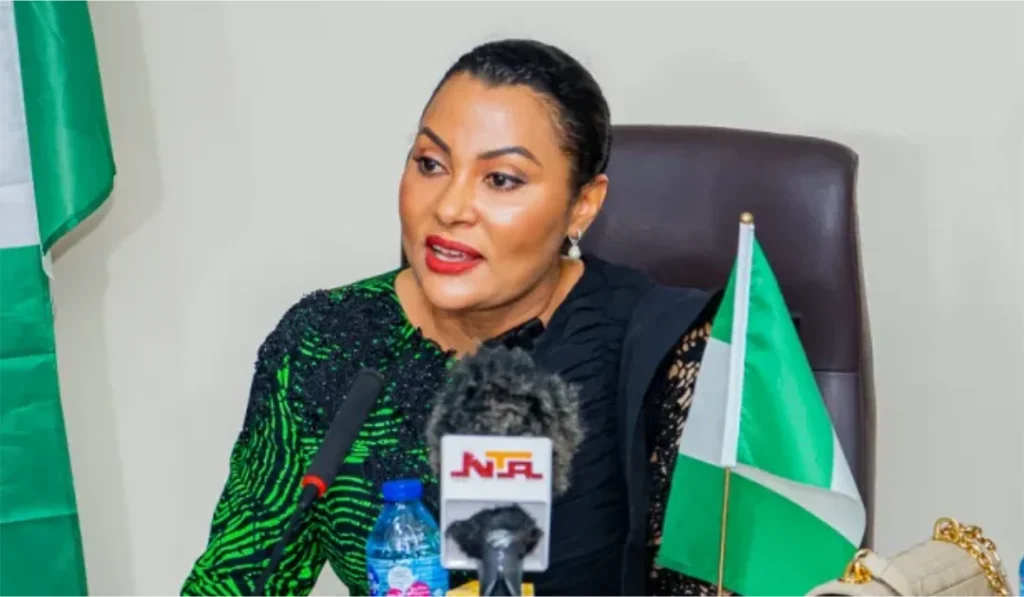
Nigeria’s Minister of State for Finance, Dr. Doris Uzoka-Anite, has described insurance as the “silent engine” driving economic resilience, urging deeper collaboration between government, industry regulators, and private insurers to strengthen the nation’s financial safety net.
Speaking at a policy roundtable on economic risk and financial inclusion in Abuja, Uzoka-Anite said insurance is essential to sustaining growth, protecting livelihoods, and maintaining fiscal stability in an increasingly unpredictable global economy.
She noted that in many developed markets, insurance serves as the backbone of long-term planning—helping governments and businesses recover quickly from disruptions such as natural disasters, health crises, or financial shocks. Nigeria, she argued, must adopt the same approach if it aims to build a self-sustaining economy.
“The truth is that no modern economy thrives without a robust insurance ecosystem,” Uzoka-Anite said. “Insurance absorbs shocks that would otherwise cripple public finances and private enterprise. It ensures continuity, confidence, and recovery.”
The minister highlighted the federal government’s push to reform Nigeria’s financial architecture, including policies aimed at strengthening insurance penetration, digital risk solutions, and fiscal resilience frameworks. She called on the National Insurance Commission (NAICOM) and industry leaders to innovate products that fit the realities of Nigeria’s informal and small-scale business sectors.
Uzoka-Anite also stressed the role of technology in deepening access, urging insurers to deploy digital platforms that can simplify claim processes and reach underserved communities. She said the Ministry of Finance would continue to champion policies that promote transparency, trust, and innovation in the sector.
Industry analysts echoed her view, noting that Nigeria’s insurance penetration remains below one percent—a stark contrast to global averages. They argue that boosting insurance adoption could unlock capital for infrastructure, agriculture, and entrepreneurship, all of which are vital for sustainable development.
Uzoka-Anite concluded that the nation’s economic transformation depends on building buffers against uncertainty. “Insurance is not just about policies or premiums,” she said. “It is the foundation of confidence on which a resilient economy stands.”
Speaking at a policy roundtable on economic risk and financial inclusion in Abuja, Uzoka-Anite said insurance is essential to sustaining growth, protecting livelihoods, and maintaining fiscal stability in an increasingly unpredictable global economy.
She noted that in many developed markets, insurance serves as the backbone of long-term planning—helping governments and businesses recover quickly from disruptions such as natural disasters, health crises, or financial shocks. Nigeria, she argued, must adopt the same approach if it aims to build a self-sustaining economy.
“The truth is that no modern economy thrives without a robust insurance ecosystem,” Uzoka-Anite said. “Insurance absorbs shocks that would otherwise cripple public finances and private enterprise. It ensures continuity, confidence, and recovery.”
The minister highlighted the federal government’s push to reform Nigeria’s financial architecture, including policies aimed at strengthening insurance penetration, digital risk solutions, and fiscal resilience frameworks. She called on the National Insurance Commission (NAICOM) and industry leaders to innovate products that fit the realities of Nigeria’s informal and small-scale business sectors.
Uzoka-Anite also stressed the role of technology in deepening access, urging insurers to deploy digital platforms that can simplify claim processes and reach underserved communities. She said the Ministry of Finance would continue to champion policies that promote transparency, trust, and innovation in the sector.
Industry analysts echoed her view, noting that Nigeria’s insurance penetration remains below one percent—a stark contrast to global averages. They argue that boosting insurance adoption could unlock capital for infrastructure, agriculture, and entrepreneurship, all of which are vital for sustainable development.
Uzoka-Anite concluded that the nation’s economic transformation depends on building buffers against uncertainty. “Insurance is not just about policies or premiums,” she said. “It is the foundation of confidence on which a resilient economy stands.”