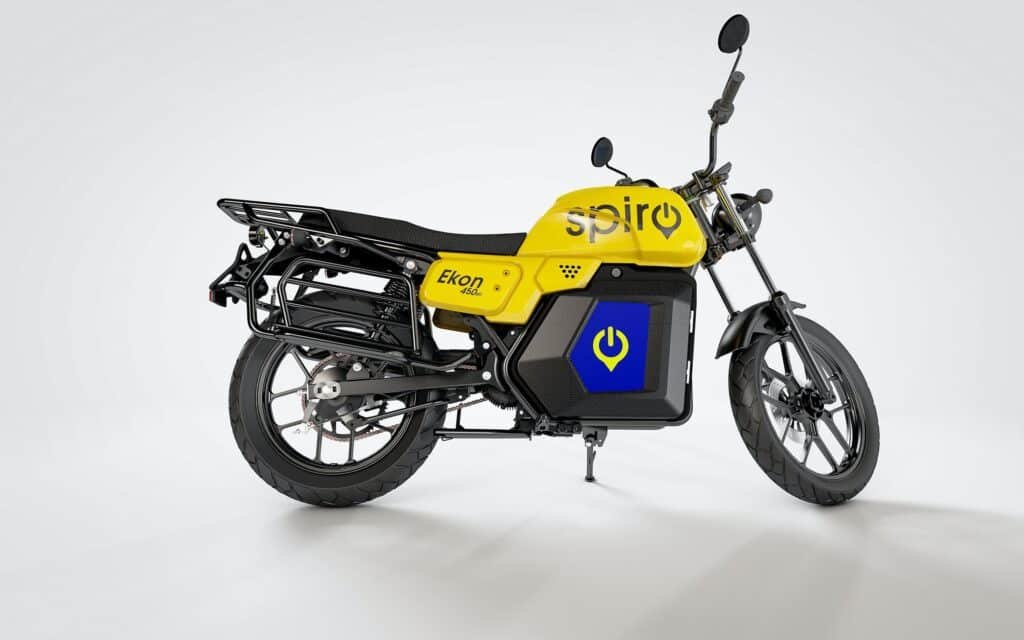
Spiro announced on October 21 2025 that it has secured a $100 million funding round and now holds over 50 per cent of Kenya’s electric motorcycle market, marking a major milestone in Africa’s clean-mobility race.
The funding round was led by the Fund for Export Development in Africa (FEDA), a subsidiary of Afreximbank, which committed around $75 million. The remainder came from other strategic backers.
Spiro says the capital will fuel its goal of deploying more than 100 000 electric bikes across Africa by end-2025, up from about 60 000 currently, and expanding its battery‐swapping network to address the needs of commercial riders.
In Kenya, where motorcycle taxis (“boda bodas”) make up a critical transport layer, Spiro’s market penetration now exceeds 50 per cent—an indication that riders are rapidly shifting from petrol bikes to electric models due to lower operating costs and growing infrastructure. (Exact breakdowns per country were not publicly disclosed.)
The electric bikes reportedly cost around $800 compared with $1 300–$1 500 for comparable petrol models in markets like Kenya and Rwanda, and operating costs are roughly 30 per cent lower thanks to the battery‐swap model.
Beyond Kenya, Spiro operates in six African countries including Uganda, Rwanda, Nigeria, Benin and Togo, and is launching pilot programmes in Tanzania and Cameroon. The company also plans to scale local manufacturing and raise local sourcing from around 30 per cent to 70 per cent within the next two years.
The implications are significant. For riders this means lower fuel and maintenance burdens. For local economies the ramp-up of assembly plants, battery infrastructure and swap stations promises jobs and industrialisation. For Africa’s environment the shift could reduce reliance on imported petrol bikes and lower urban emissions.