Read Time:1 Minute
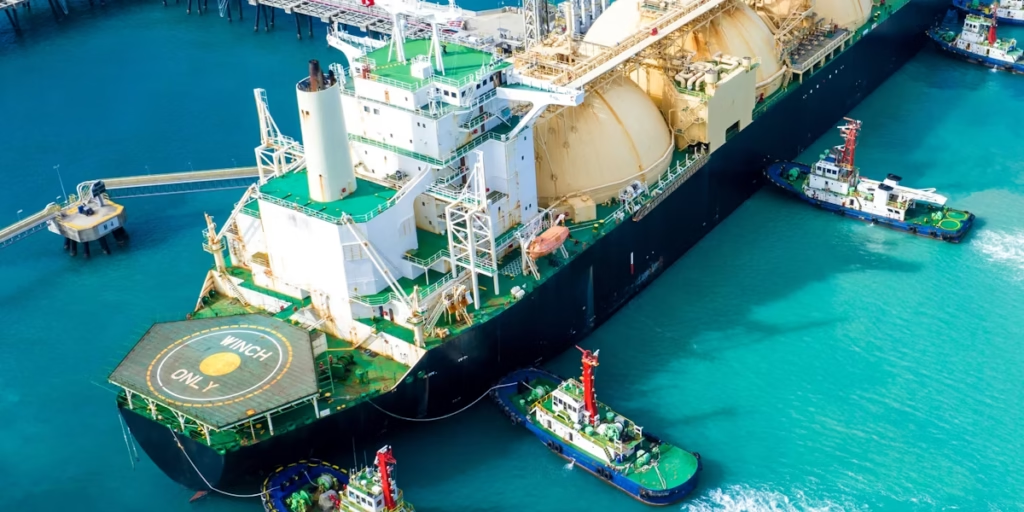
A coming surge in liquefied natural gas (LNG) production between now and 2030 is set to reshape global gas markets by shifting pricing power toward buyers and easing supply pressures worldwide.
According to the International Energy Agency, new liquefaction capacity additions could raise net LNG supply by about 250 billion cubic metres annually by 2030. This growth is being led by major projects in the United States and Qatar, each approving record expansion plans.
As supply grows, the LNG market is expected to evolve from a seller’s arena into a buyers’ market, with downward pressure on prices that could benefit gas importers in Asia, Europe, and other high-demand regions. Meanwhile, analysts warn that too steep a price drop may discourage future investment in new LNG projects, risking supply tightness later.
The expansion also comes as global gas demand continues to rise, especially from power generation, data centers, and industrial use in emerging markets. The IEA forecasts about 1.5 % annual growth in gas demand from 2024 to 2030.
In countries like Qatar, the North Field expansion is expected to boost LNG output significantly, raising its export capacity from about 77 million tons to 110 million tons by 2026. Meanwhile, projects under development globally are estimated to increase total capacity by over 50 % during this decade.
But this transition will not be seamless. Geopolitical risks, regulatory delays, and financing constraints could slow some projects. Market observers say the speed and scale of change will test which suppliers stay competitive, and which markets adapt fastest to the new gas order.
According to the International Energy Agency, new liquefaction capacity additions could raise net LNG supply by about 250 billion cubic metres annually by 2030. This growth is being led by major projects in the United States and Qatar, each approving record expansion plans.
As supply grows, the LNG market is expected to evolve from a seller’s arena into a buyers’ market, with downward pressure on prices that could benefit gas importers in Asia, Europe, and other high-demand regions. Meanwhile, analysts warn that too steep a price drop may discourage future investment in new LNG projects, risking supply tightness later.
The expansion also comes as global gas demand continues to rise, especially from power generation, data centers, and industrial use in emerging markets. The IEA forecasts about 1.5 % annual growth in gas demand from 2024 to 2030.
In countries like Qatar, the North Field expansion is expected to boost LNG output significantly, raising its export capacity from about 77 million tons to 110 million tons by 2026. Meanwhile, projects under development globally are estimated to increase total capacity by over 50 % during this decade.
But this transition will not be seamless. Geopolitical risks, regulatory delays, and financing constraints could slow some projects. Market observers say the speed and scale of change will test which suppliers stay competitive, and which markets adapt fastest to the new gas order.