Read Time:1 Minute
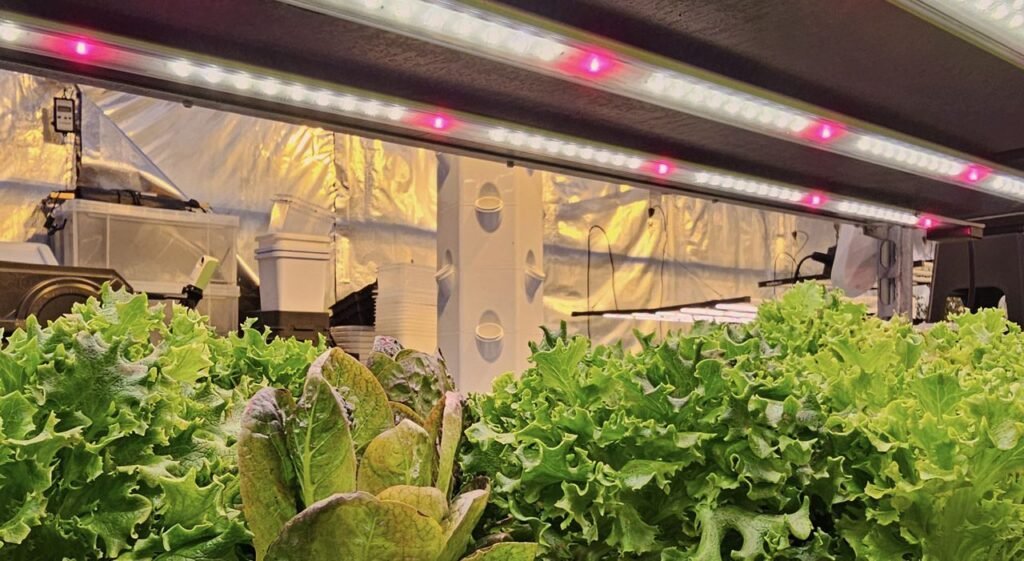
A report by SNS Insider reveals that the global horticulture lighting market was valued at approximately USD 4.60 billion in 2024 and is expected to reach around USD 23.08 billion by 2032, driven by a compound annual growth rate (CAGR) of 22.34 % from 2025 to 2032.
The surge is largely attributed to the increasing adoption of controlled-environment agriculture (CEA) techniques, including indoor and vertical farming, which support year-round crop production independent of weather or season. LED-based horticulture lighting systems are central to this shift thanks to their energy efficiency and ability to tailor light spectra for plant growth.
According to the report, hardware (such as fixtures, ballasts and control units) held around 91.4 % of the market share in 2024, while LED technology dominated with about 80.3 % share. Greenhouse applications represented approximately 43.2 % of the market that year, with fruits and vegetables cultivation accounting for about 46.9 %.
Regionally, North America led with a 39 % market share in 2024, driven by strong uptake of indoor and vertical farming and cannabis cultivation. Asia-Pacific followed with 29.4 % of the global share, spurred by rapid urban farming adoption and sustainability initiatives in countries such as China, India and Japan.
The implications for agritech and lighting firms are significant. As growers seek greater yield, year-round production and energy-efficient systems, manufacturers and service providers may find large opportunities in system integration, retrofit projects and smart lighting controls. The high projected growth rate suggests that investment in R&D, supply chains and global distribution will be crucial.
However, challenges remain. The initial capital cost for lighting infrastructure and the energy consumption associated with large-scale indoor farms could slow adoption in cost-sensitive markets. Also, achieving optimal light spectrum and management remains a technical barrier for smaller growers. While the report outlines robust demand, the assumption here is that global electricity costs, adoption rates and regulatory support remain favorable.