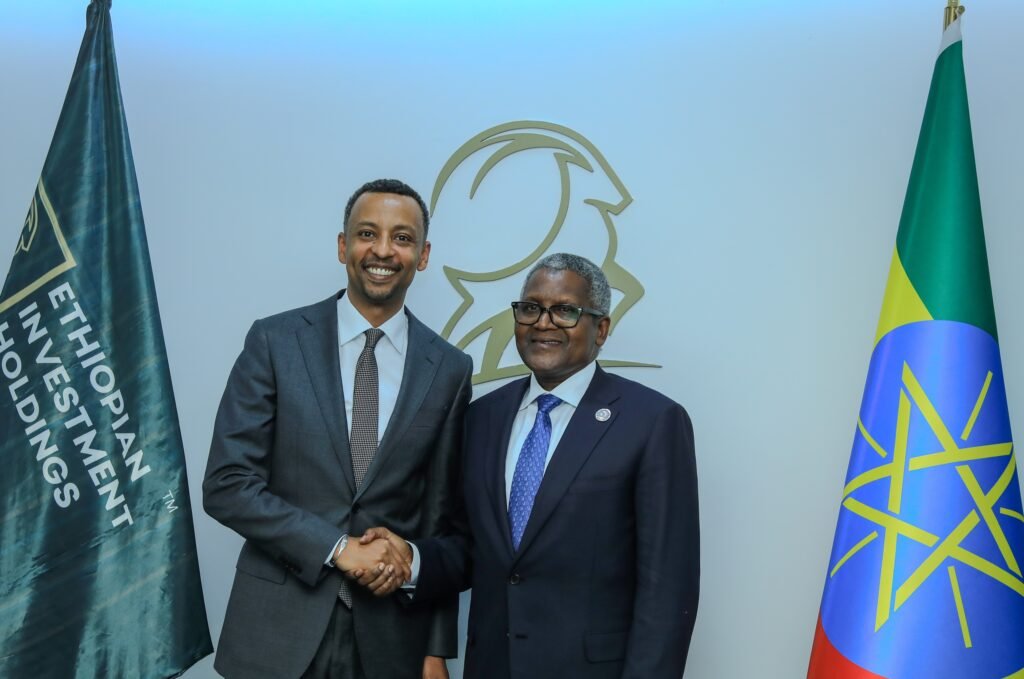
Addis Ababa, Ethiopia The Dangote Group has officially inked a US$2.5 billion agreement with the Ethiopian government to build a world-class fertiliser production complex in Gode, in Ethiopia’s Somali Regional State. The development is being carried out in partnership with Ethiopian Investment Holdings (EIH). Under the deal, Dangote takes 60% equity, while EIH will hold 40%.
Key Details & Ambition
– The plant will focus on urea fertiliser, targeting a production capacity of 3 million metric tonnes annually — putting it among the top five largest single-site urea production complexes in the world.
– Construction will take approximately 40 months from commencement.
– A major part of the project infrastructure involves building a dedicated pipeline to transport natural gas from Ethiopia’s Hilal and Calub gas reserves, which will serve as feedstock.
– The scope includes logistics, storage, export capacity, and potential future expansions into other fertiliser types (like ammonium nitrate, ammonium sulphate, calcium ammonium nitrate) to deepen Ethiopia’s role as a regional fertiliser hub.
Strategic & Economic Impacts
– Food Security & Import Reduction: Ethiopia spends around US$1 billion annually on fertiliser imports. This facility is expected to drastically reduce that dependency.
– Job Creation: The project is set to generate thousands of direct and indirect employment opportunities in Gode and surrounding regions.
– Industrialization Push: The plant is a major step in Ethiopia’s economic strategy to industrialize agriculture, add value locally, and strengthen the supply chain in fertiliser and gas.
– Revenue & Exports: Beyond domestic supply, there’s an expectation that surplus fertiliser could be exported to neighbouring countries — enhancing Ethiopia’s trade profile in inputs.
Challenges & Considerations
– Infrastructure & Logistics: Building pipelines from Calub and Hilal, storage and transport logistics in remote Gode will require careful planning, heavy investment, and regulatory coordination.
– Feedstock Security & Gas Supply: The plant’s viability depends on stable, adequate natural gas supply from the gas fields. Any disruption — geological, regulatory, or environmental — could affect production costs and timelines.
– Environmental and Social Impacts: Large industrial complexes often come with community displacement risks, potential environmental consequences, and expectations for local benefits that must be managed transparently.
– Political / Regulatory Risk: While Ethiopia has been reforming, investing in large scale infrastructure still involves navigating complex local, regional, and international governance dynamics.
What This Means
– This project marks one of the largest private-sector industrial investments in Ethiopia’s history. For Dangote, it deepens its East African footprint beyond cement and creates a template for leveraging African resources, local partnerships, and economies of scale. For Ethiopia, it’s a giant leap toward agricultural resilience, export potential, and increased control over inputs that historically drained foreign exchange.
– If the Gode fertiliser complex meets its targets, it may become not just a landmark in Ethiopia, but a beacon for industrial collaboration across Africa, showing how governments and private businesses can partner to build large, strategic infrastructure with regional impact.